
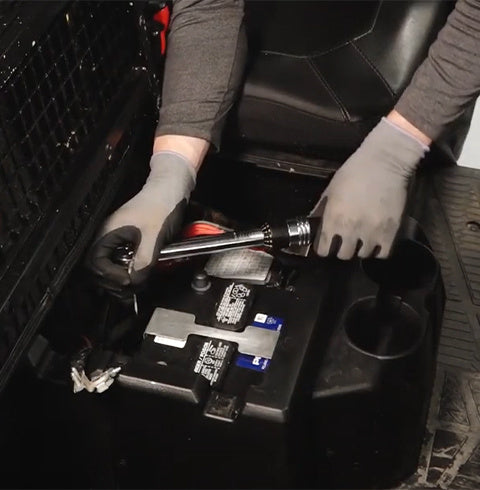
Polaris Ranger Battery Maintenance Guide
Strong starts, bright lights, and reliable winching all hinge on one routine: Polaris Ranger Battery Maintenance. This hands-on Polaris Ranger Battery Maintenance Guide turns the specs from your owner’s manual into driveway-friendly habits that guard voltage, extend lifespan, and stop surprise no-starts.
Why Polaris Ranger Battery Maintenance Matters
- Reliability – consistent voltage fires the 999 cc twin before fuel floods the cylinders.
- Electronics protection – stable power shields the ECU and dash from brown-outs.
- Longevity – disciplined Polaris Ranger Battery Maintenance that keeps voltage above 12.7 V can double AGM life.
30-Second Pre-Ride Check
- Glance at the dash voltmeter: 12.7 – 13.0 V cold is perfect.
- Step on the brake and hit START; big light dim? Schedule Polaris Ranger Battery Maintenance tonight.
- Wiggle each cable; tighten loose 10 mm nuts and add dielectric grease.
Easy Maintenance Schedule
This Polaris Ranger Battery Maintenance Guide keeps the routine simple.
- Every outing – perform that quick volt-and-cable check.
- If parked > two weeks – connect a 2-amp tender to the hood pigtail.
- Once a month – after four hours off, test with a multimeter:
- 12.8 V + : perfect.
- 12.5–12.7 V: overnight charge.
- < 12.5 V: charge now—sulfation has begun.
- Winter storage (30+ days) – pull the battery, store above freezing, and keep it float-charged.
Tip: the rear accessory socket is ignition-hot; always use the tender lead for your Polaris Ranger Battery Maintenance sessions.
Charging Step-by-Step
- Positive clamp first, negative second.
- Select AGM mode on the charger.
- Let the smart charger finish—float mode handles the rest.
- Pause if the case feels hot.
- One hour after “Full,” confirm 12.8 V +; if lower, plan a replacement before next season.
Troubleshoot at a Glance
| Symptom | Cause | Fix per this Polaris Ranger Battery Maintenance Guide |
| Click-click, no crank | < 12.3 V or loose ground | Charge & tighten |
| Stalls when lights on | Voltage collapse | Replace sulfated AGM |
| EPS light while winching | Stator overload | Idle at 2,000 rpm or add second battery |
Accessory Etiquette
- Fuse every add-on; a shorted wire can tank voltage in seconds and cause fires.
- Route harnesses away from sharp edges—vibration cuts insulation.
- Disconnect seasonal gear when idle; parasitic draw defeats Polaris Ranger Battery Maintenance.
Winter-Proof Storage Checklist
- Remove the seat and lift the bracket.
- Unhook negative, then positive.
- Clean posts, grease lightly, and place the AGM on a shelf.
- Attach a smart tender or top up monthly.
- Log the date—good records are part of complete Polaris Ranger Battery Maintenance.
Your Polaris Ranger's battery is essential for reliable performance. With proper care and the right tools, you can avoid common issues and keep your machine ready for action.
Shop Polaris Ranger Batteries and Accessories Now and ensure your Ranger is powered up for every adventure!
Recommended Reading
- Polaris Ranger 1000 Maintenance Schedule: The Complete Schedule
- Polaris Ranger Oil Change Guide: Step-by-Step Service for Your Ranger 1000
- Polaris Ranger Air Filter Maintenance: The Dust-Proof Guide for Ranger 1000 Owners
- Polaris Ranger Brake Maintenance: Trail-Ready Braking Power
FAQS
What’s the fastest way to check if my Polaris Ranger battery is healthy before a ride?
Do a 30-second pre-ride check: glance at the dash voltmeter—12.7 – 13.0 V cold is ideal—then step on the brake and hit START. If the lights dim heavily or the reading is below 12.7 V, schedule a battery maintenance session that evening. Finally, wiggle each cable; tighten any loose 10 mm nuts and dab dielectric grease on the posts.
How should I store my Polaris Ranger battery during the winter?
For storage longer than 30 days, remove the seat, disconnect the negative cable first, then the positive. Clean and lightly grease the posts, place the AGM battery on a shelf in a location above freezing, and keep it float-charged with a smart tender. Log the storage date so you can track your maintenance history.
